These days there are so many different contraceptive methods available that it can be hard to find the one that suits you. There's contraception with or without hormones, contraception you take every day and contraception you don't have to think about at all. In the past this was much simpler. In the Middle Ages, people made their own condoms from sheep intestines and fish skin. In ancient Egypt, a spermicidal paste of honey, acacia thorns and crocodile dung was applied to the vulva.
Fortunately, we no longer have to resort to these methods. Still, choosing from all the contraceptives on the market today can be difficult. We'll take you through the contraceptive methods, how they work and how they can affect your menstrual cycle.
The contraceptive pill

This is a small pill that contains hormones. These hormones ensure that no egg is released and that the uterus isn't prepared for fertilisation. The hormones also make it harder for sperm to enter the uterus. The contraceptive pill usually contains two types of hormones, depending on the type of pill you use. The combined pill contains the hormones oestrogen and progestogen. Oestrogen ensures a predictable bleed. Because the mini pill contains only one hormone, it's particularly suitable for women who are breastfeeding. If you take the pill at the same time every day and start a new strip on time (within 7 days) after your pill-free week, the chance of pregnancy is only 0.3%.
Effect on your cycle:
Most contraceptive pills come in a strip of 21 pills. You take these for three weeks, followed by a pill-free week in which you don't take a pill. During this pill-free week you usually bleed, often with symptoms such as abdominal cramps, headaches and muscle aches. However, the pill can help reduce these period symptoms, so you experience less pain. The pill can also limit blood loss and reduce other period-related symptoms such as sore breasts and bloating.
Is the pill good for you or not?
The pill is the most widely used form of contraception, and many people wonder whether it's actually good for them. There are lots of stories going around, for example that the hormones in the pill can make you feel low or reduce your sex drive. What's true? The honest answer: it differs per person. Everyone reacts differently to hormones.
By the way, the pill isn't only used to prevent pregnancy. Many women also take the pill for a more regular cycle, for painful or heavy periods, or for acne.
Is the bleed in your pill-free week a real period?
Not quite. Because you don't ovulate on the pill, your uterine lining builds up less thickly. The bleed in your pill-free week is called a withdrawal bleed. It's usually regular and lighter than a normal period.
What should you look out for?
- The pill only works well if you take it consistently. If you forget pills, the pill becomes less reliable.
- With vomiting or severe diarrhoea, and with some medicines, the pill may work less well. Check the leaflet or ask your pharmacist.
- The pill doesn't protect against STIs. For that you need a condom.
Possible side effects
Not everyone experiences side effects, and they differ per person. Some women notice, for example:
- sore breasts, nausea or headaches
- mood swings
- changes in weight
In a small proportion of women, the pill can slightly increase the risk of, for example, thrombosis or high blood pressure. Your GP can assess whether that's relevant for you.
Possible benefits
- Your period often becomes lighter, more regular and less painful.
- The pill can reduce symptoms of hormonal conditions such as PCOS and endometriosis.
- Long-term pill use lowers the risk of endometrial cancer and ovarian cancer.
So whether the pill is good for you is a personal choice. Weigh up the pros and cons, discuss them with your GP and choose the method you feel good about. Don't let yourself be guided too much by what your friends or family use. There's no right or wrong.
The contraceptive ring
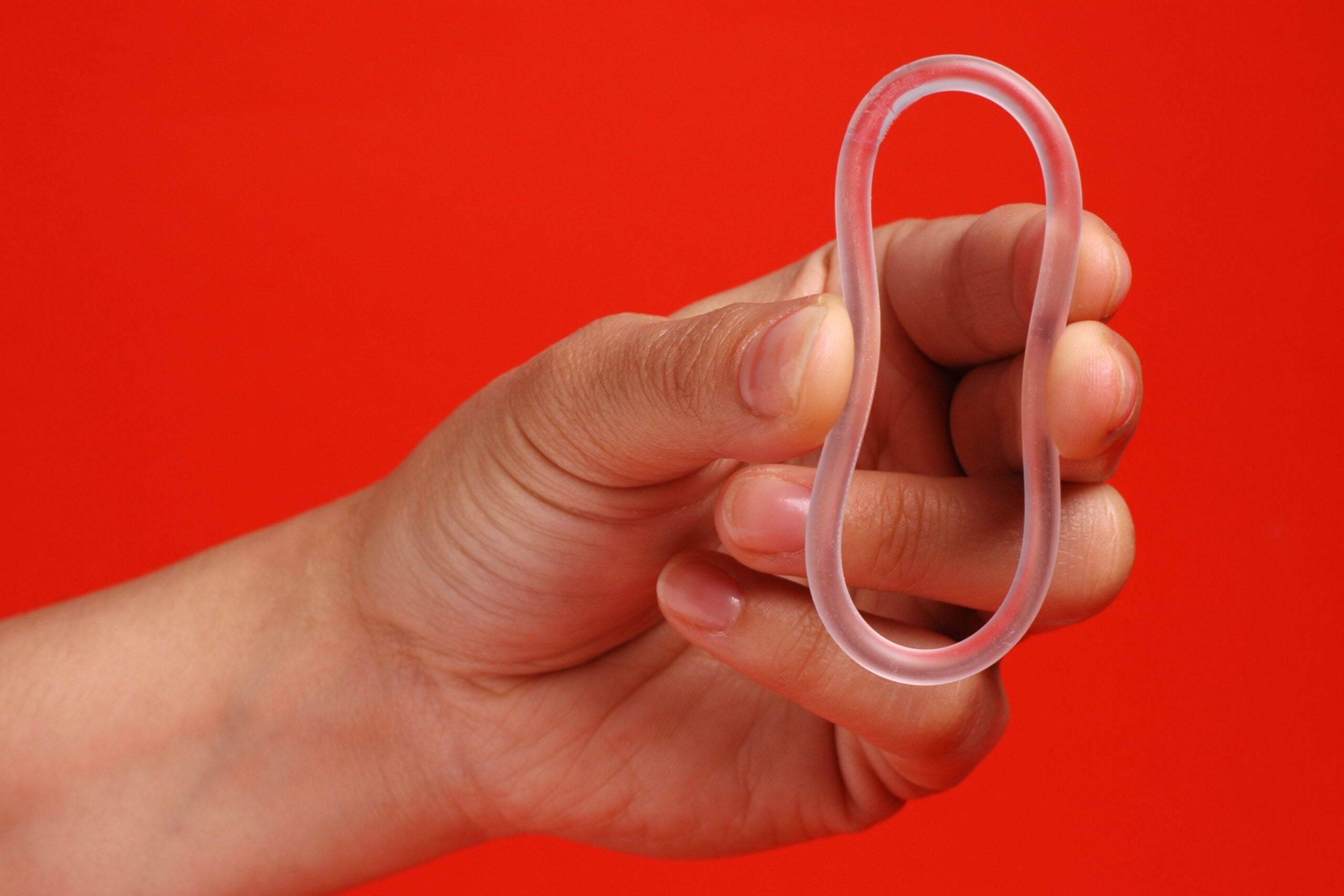
The contraceptive ring is a soft, flexible plastic ring of 5 cm that you insert into your vagina yourself. It's designed so that you don't feel it and it can't easily fall out, so you can carry on with your favourite activities, such as swimming and sports. Two types are available in the Netherlands: NuvaRing and Ornibel. The ring contains the hormones etonogestrel and ethinylestradiol. Every day the ring releases a small amount of hormones, which enter your blood through the lining of your vagina. Because the hormones are released evenly, you don't get hormone peaks. The ring has to be removed every month, after 3 weeks. If you don't insert a new one, you can expect your bleed. After the ring-free week you insert a new ring. If you replace the ring on time every time, the chance of pregnancy is about 0.7%. When you stop using the ring, you can get pregnant straight away.
Effect on your cycle:
Possible side effects include vaginal bleeding outside the ring-free week, also called spotting, which is very normal. You may also have pain or heavier bleeding during the ring-free week. Sometimes your bleed may stay away altogether. If that happens, don't worry, but do keep an eye on it. If you're in doubt, contact your GP.
Contraceptive implant
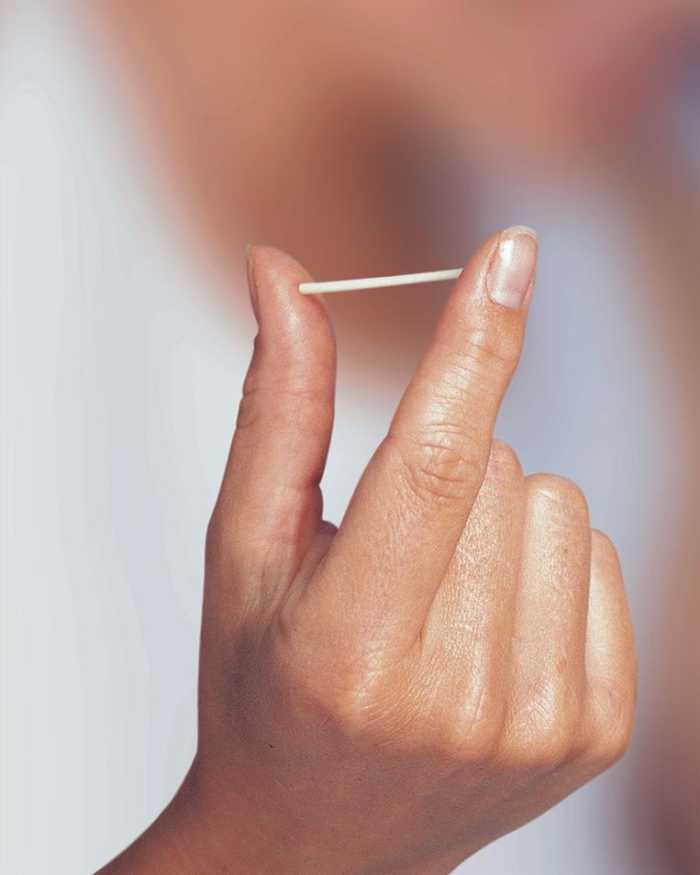
A contraceptive implant, also known as Implanon NXT, is one of the many contraceptive methods in the Netherlands. The hormone implant is placed under the skin of your upper arm by a doctor, under local anaesthetic. Once it's in place, you're protected against pregnancy for three years, so you don't have to think about contraception every day. This form of contraception releases a low dose of hormones into your bloodstream, so you don't have hormone fluctuations. After 3 years, or earlier if you want, your doctor removes the implant. After removal, your fertility returns after your first period. You can also choose to have a new implant placed straight away. With this method, the chance of getting pregnant is very small: fewer than 5 in 1,000 women with an implant get pregnant each year.
Effect on your cycle:
With this method there's no implant-free week, and you can't skip or move your period. Your bleeding pattern can change, though. For some people bleeding stops completely, for others it becomes irregular or lasts longer, and in a few cases it becomes heavier.
Contraceptive injection
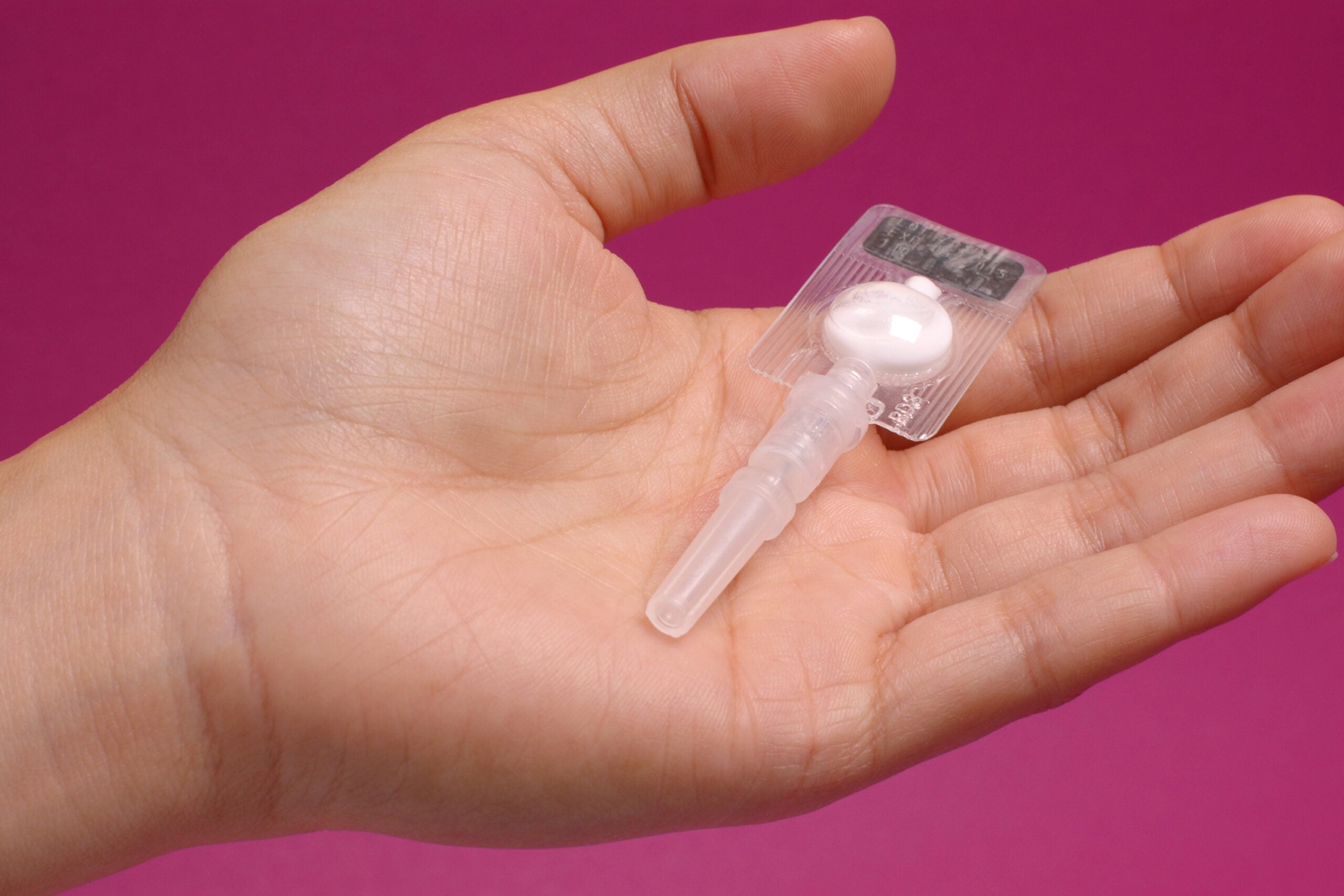
The contraceptive injection is a common form of contraception in the Netherlands. It's an injection that gradually releases a progestogen hormone into your bloodstream, which prevents ovulation and makes it harder for sperm to pass through the mucus of the cervix. One injection is meant to protect you against pregnancy for 12 to 13 weeks. In the Netherlands there are 2 types: Depo-Provera, which is injected into your buttock or upper arm, and Sayana Press, which is injected under your skin. Here too the chance of pregnancy is small, around 0.5%. Only if you forget to get your next injection is there a real chance of getting pregnant.
Effect on your cycle:
When you first start with this method, you may have irregular or prolonged bleeding. Irregular bleeding in the first few months is a common side effect of the injection. Once your body has adjusted a bit, your bleeding usually becomes lighter or stops altogether.
IUD (coil)

An IUD is a common choice of contraception. It's a small anchor-shaped device that a trained doctor places in your uterus. There are two types: the hormonal IUD and the copper IUD. A hormonal IUD contains progestogen, which is gradually released into the lining of your uterus. It works for 5 to 8 years and, unlike other hormonal methods, releases less hormone into your blood. Then there's the copper IUD. It contains no hormones, which is ideal if you're not allowed to use hormonal contraception or simply aren't a fan of it. A copper IUD can protect against pregnancy for 5 to 10 years. Unlike with the pill, with any IUD you keep your ovulation and therefore your own natural hormonal cycle.
Effect on your cycle
An IUD can have a considerable effect on your bleeding pattern. The copper IUD usually makes periods heavier. With a hormonal IUD, on the other hand, you get more irregular bleeding at first, after which bleeding decreases considerably and may even stop completely over time. For some women the opposite happens: they have no periods for the first few months or even years, but then they start again.
Female condom
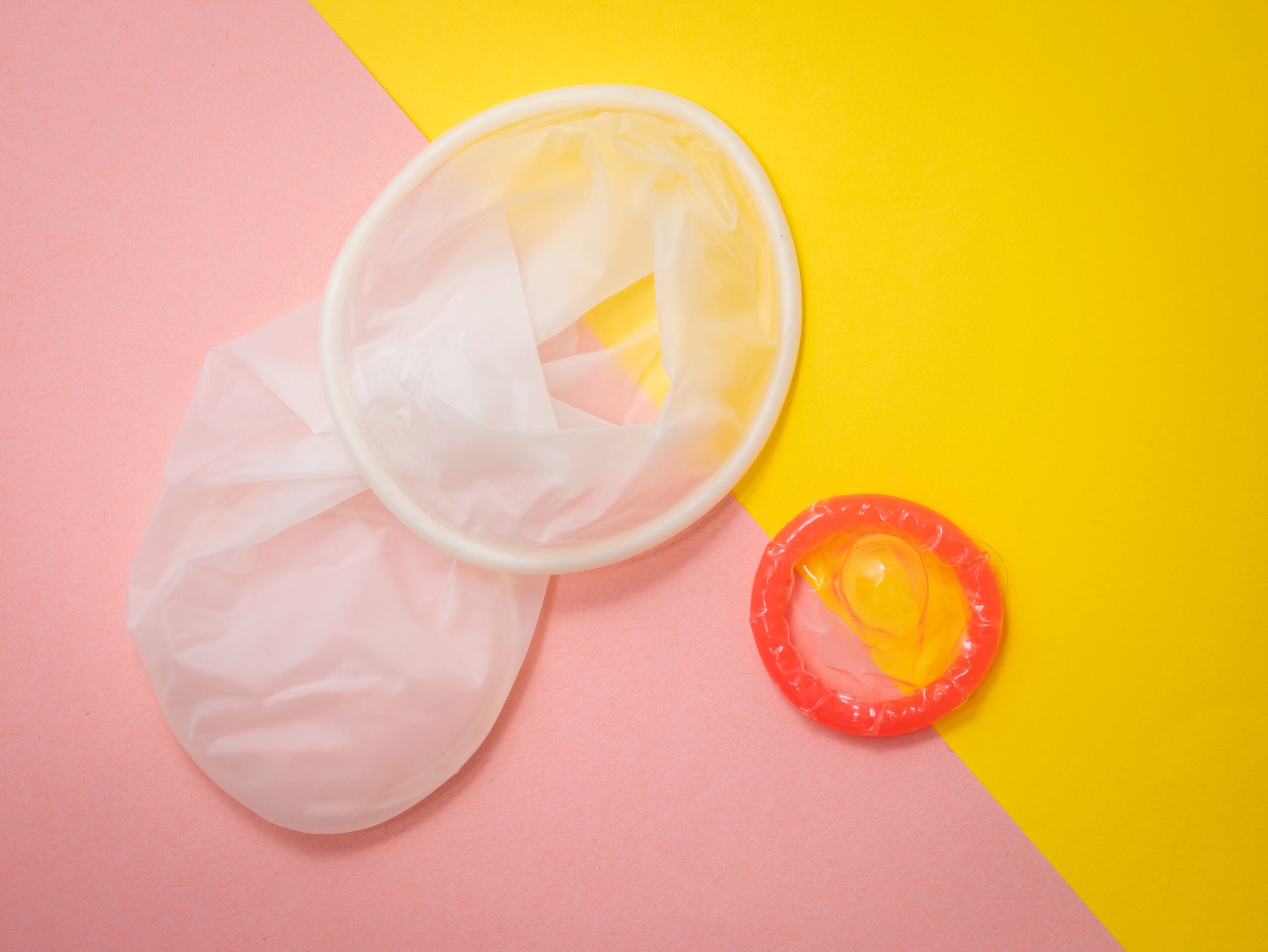
The name says it all. It's a kind of pouch with two flexible rubber rings at the ends that you place in your vagina. It catches sperm and protects you against pregnancy and STIs.
Effect on your cycle
This is one of the few contraceptives that contain no hormones. That's why it has no effect on you or your fertility, and you can get it without a prescription or a visit to the doctor.
So there's plenty to choose from. Still, it's important to weigh up the pros and cons before you make a choice. Contraception can help regulate your cycle and relieve period symptoms, but it can also come with unwanted side effects. So always talk to your GP first about which method suits you best, and then do what feels right for you. In the end, nobody knows your body the way you do.