Hot flashes, poor sleep, suddenly having a different menstrual cycle, or noticing that your body is changing. These can be the first signs of the transition. Menopause is often mentioned in the same breath as the transition, but did you know that they are actually not the same thing?
The transition (perimenopause) is the period around your last period during which your hormonal balance changes. Menopause is the moment of your very last period. You only know exactly when that was in hindsight: if you haven't had a period for a year, then you know that your menopause has passed. On average, menopause occurs around the age of 51.
And that transition? It is different for everyone. Some people mainly suffer from hot flashes, while others notice changes in their periods, weight, sleep, or mood. Time to list exactly what happens.
When does menopause start?
Menopause occurs on average around the age of 51, but the first changes in your body often begin years earlier. We call this period perimenopause. Your hormone levels start to fluctuate, your period changes, and you may experience the first transition symptoms.
The transition can take place between the ages of 40 and 60. For some women, the first symptoms appear around the age of 40, while others do not notice changes until much later.
How long does perimenopause last?
Perimenopause begins when your menstrual cycle changes due to hormonal fluctuations. This often happens somewhere between the ages of 40 and 50.
The period of irregular periods before menopause usually lasts about four years, but can be shorter or longer for some women.
What are the first symptoms and complaints of the transition?
The first signs of the transition are often changes in your period. Your cycle can become shorter or longer, periods may be skipped for a while, and you may lose more or less blood. This is because your hormone levels start to fluctuate during perimenopause.
Besides a changing period, you may experience various transition symptoms. The most common symptoms of the transition are:
- Irregular periods: your period comes more often, less often, or sometimes stays away for months.
- Hot flashes and night sweats: sudden heat waves, sometimes with heavy sweating.
- Sleep problems and fatigue: difficulty sleeping or waking up regularly, for example due to night sweats.
- Mood swings: being more easily irritated, feeling gloomy, or having difficulty concentrating.
- Vaginal dryness: due to hormonal changes, the vagina may feel drier.
- Weight changes: you may notice that you gain weight more easily or that fat is distributed differently over your body.
- Muscle and joint complaints: some women experience more stiffness or pain.
- Bladder problems: needing to urinate more often or involuntary urine loss, for example when sneezing or exercising.
Not every woman experiences the same menopause symptoms. Some women have hardly any symptoms, while others suffer from them daily. Moreover, not every complaint is automatically caused by the transition. Some changes may also be related to aging or other health factors.
How do you know for sure if you are in the transition?
During the transition, you can often already recognize that your body is changing. Especially your age, irregular periods, and typical transition symptoms can indicate that you are in perimenopause.
A blood test is usually not necessary to determine if you are in the transition. Your hormone values fluctuate strongly during this period, so a single measurement often does not provide a reliable picture.
Note: the transition and menopause are not the same. You may already experience symptoms during the transition, but you only know in hindsight when your menopause has occurred. That is when you have not had a period for twelve consecutive months, without any other explanation for the absence of your period.
According to medical classification, perimenopause continues until twelve months after your last period. After that, postmenopause begins.
Can you still get pregnant during perimenopause?
Yes, you can still get pregnant during perimenopause. Although your fertility decreases, your ovaries can still release eggs.
Even when your period is absent for months, ovulation can occur unexpectedly. An irregular period therefore does not automatically mean that you are no longer fertile.
Do you not want to become pregnant? Then contraception remains important. When you can safely stop depends on your age and the contraceptive you are using. Consult your GP about this, especially if you use hormonal contraception.
What is the difference between perimenopause, menopause, and postmenopause?
Although these terms are often used interchangeably, they do not mean the same thing.
|
Perimenopause |
Menopause |
Postmenopause |
|
|
When? |
Often from age 40, sometimes earlier or later. |
On average around age 51. |
From 12 months after your last period. |
|
How long? |
The phase before the last period usually lasts about 4 years. Medically, perimenopause continues until 12 months afterward. |
One moment: your last period. |
The rest of your life. |
|
Menstruation |
Becomes irregular and can be heavier or lighter. |
The very last period. |
Periods stop. |
|
Hormones |
Estrogen and other hormones fluctuate strongly. |
Hormonal changes lead to the definitive cessation of menstruation. |
Estrogen remains at a lower level. |
|
Getting pregnant? |
Yes, as long as ovulations still occur. |
You only know in hindsight that this was your last period. |
A natural pregnancy is no longer to be expected. |
|
Symptoms |
Hot flashes, sleep problems, mood swings, and changing blood loss. |
Transition symptoms may be present. |
Hot flashes can persist; vaginal dryness may also persist. |
How do you know if you have reached menopause?
You cannot determine on the day itself that you have reached menopause. You only know in hindsight, when you have not had a period for twelve consecutive months, without any other explanation for the absence of your period.
Your last period was then officially your menopause. You are then in postmenopause and a natural pregnancy is no longer to be expected.
How does your blood loss change during menopause?
Just before menopause, your period can become quite unpredictable. An irregular period during the transition is therefore one of the most common changes.
There may be more or less time between two periods, your period may last longer or shorter, and you may lose more or less blood than you are used to. For many women, the cycle first becomes shorter and then longer, until the period eventually stops altogether.
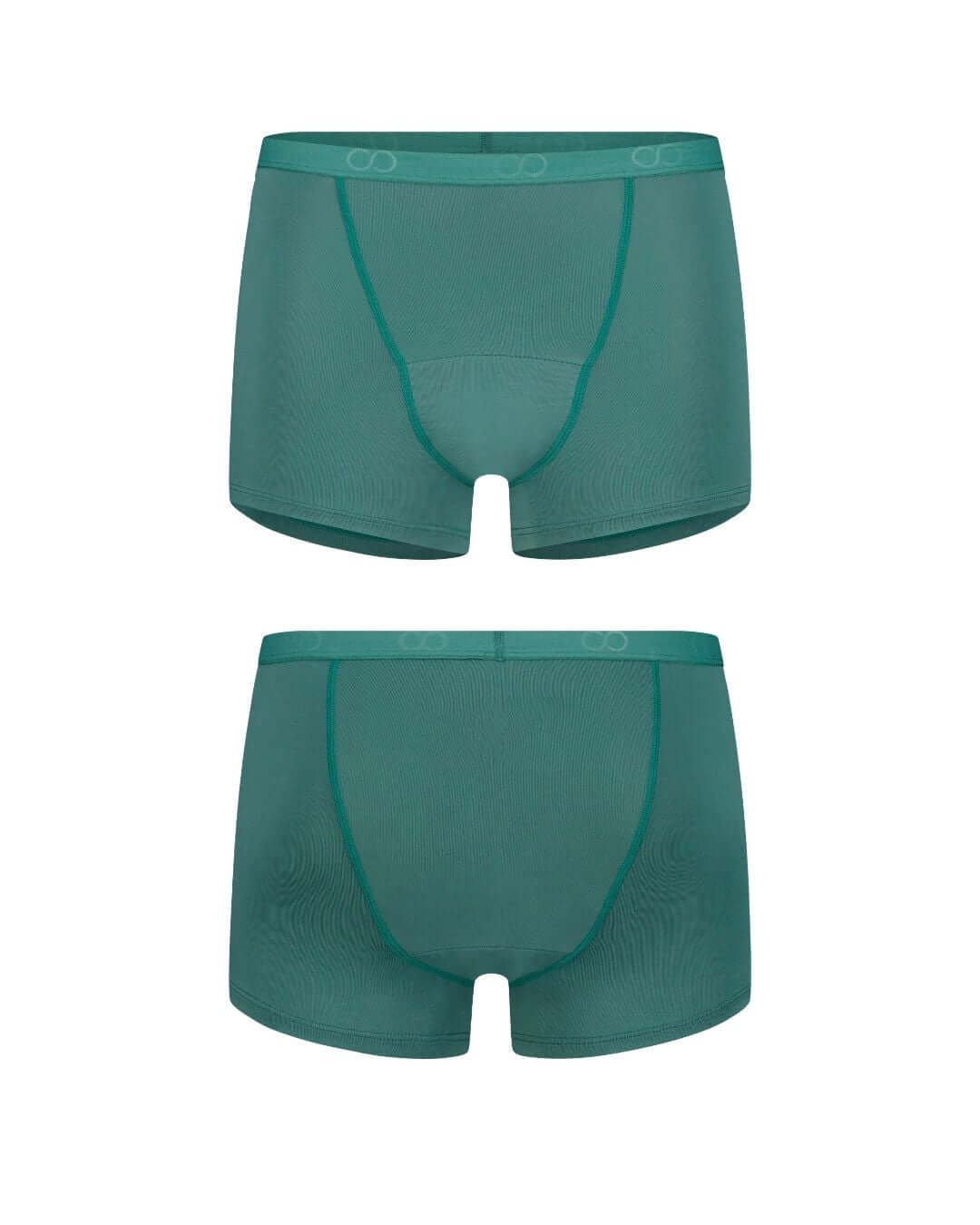
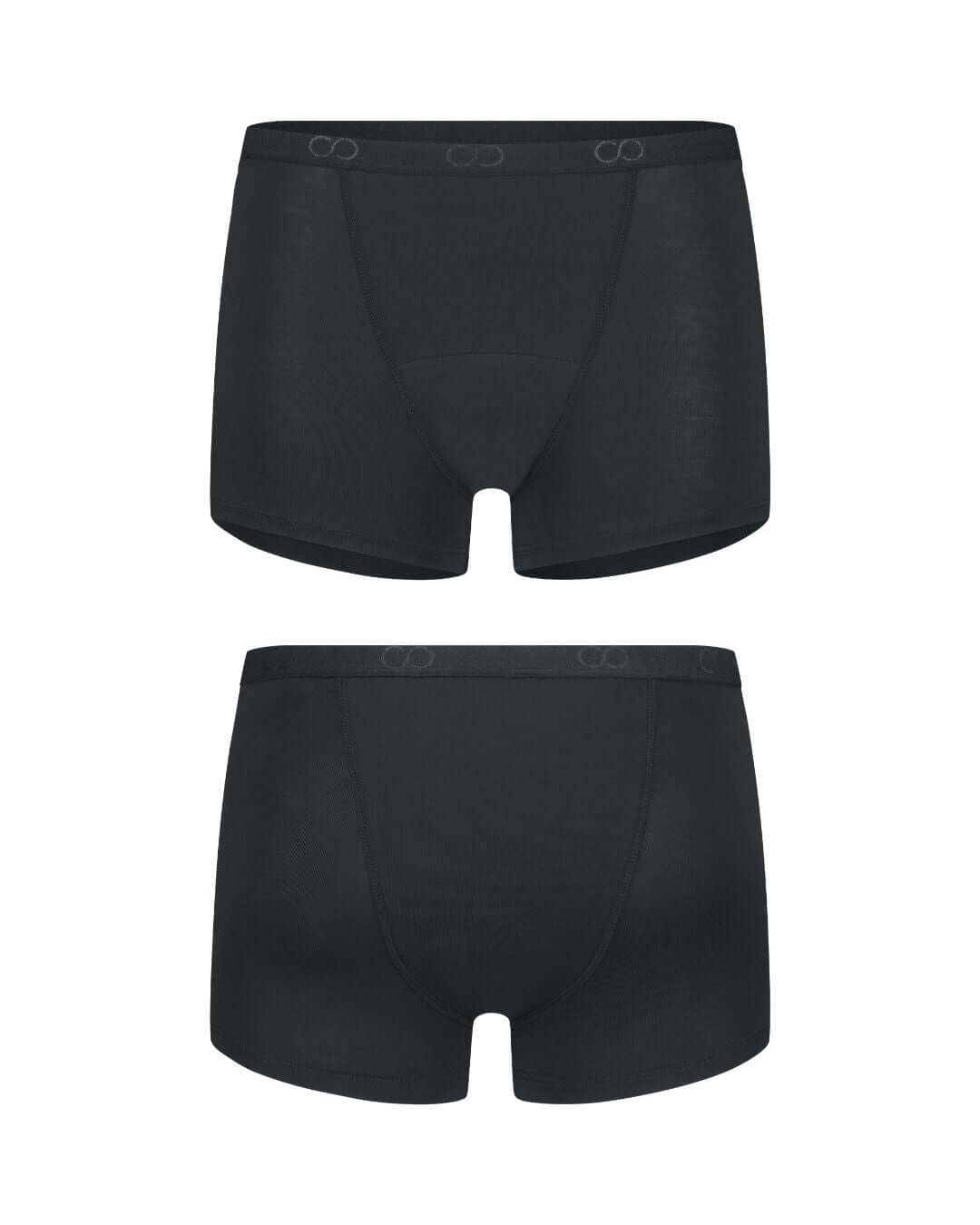
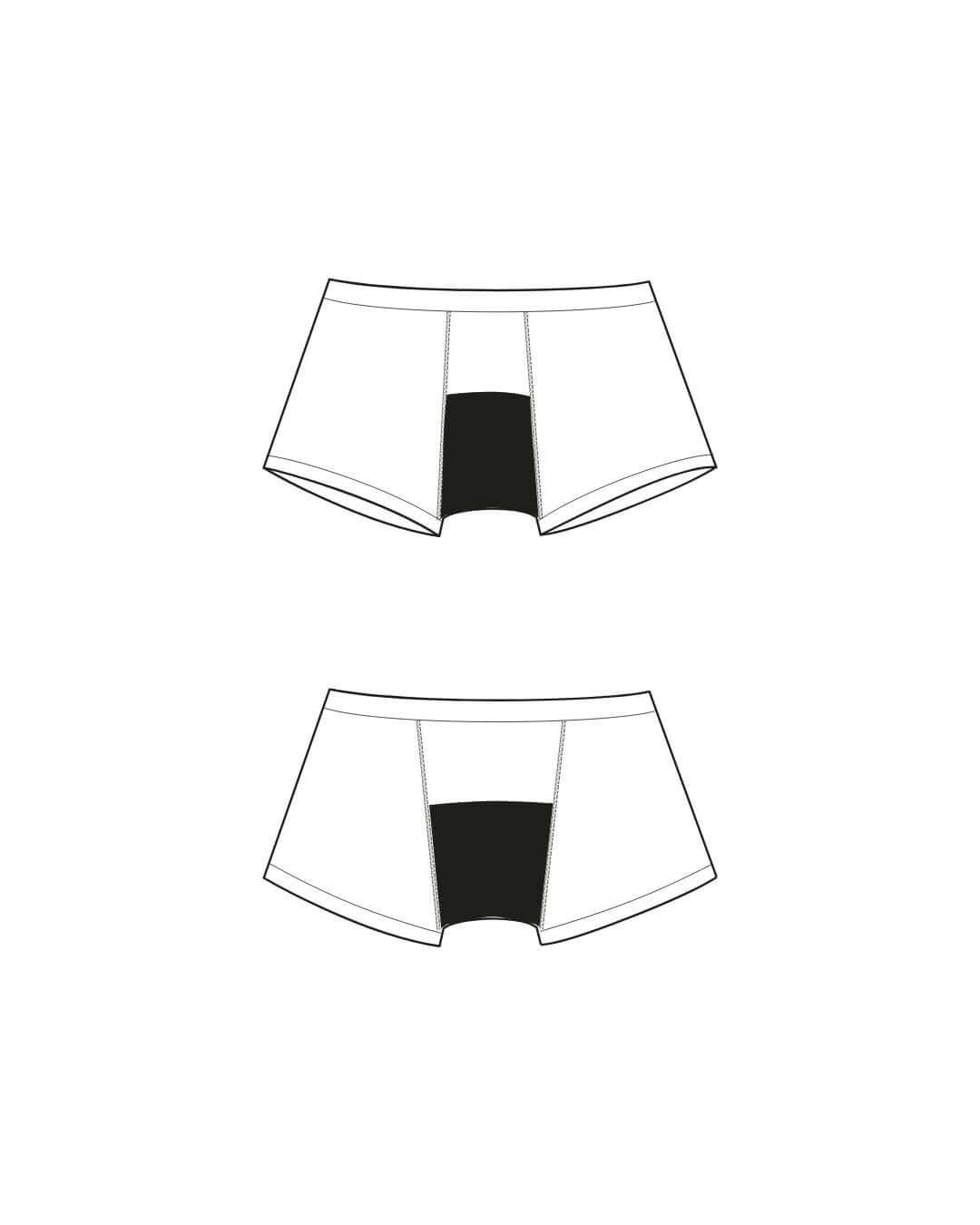
Heavy periods during the transition also occur regularly. Because your period can become more unpredictable, it is sometimes difficult to estimate when you will get your period and how much blood you are losing. It can therefore be nice to take this into account, for example by having menstrual products on hand or wearing period underwear for extra security.
Urine loss during the transition: why does that happen?
Besides changes in your period, you may also notice during the transition that your bladder reacts differently. Some women need to urinate more often or occasionally lose a few drops of urine, for example when sneezing, laughing, or exercising.
Urine loss during the transition can have various causes. Due to the drop in estrogen, the mucous membranes around the vagina and urinary tract can change. In addition, the pelvic floor muscles may function less effectively due to age, pregnancy, or childbirth, among other things.
Light urine loss in women occurs regularly, but does not mean you have to just live with it. Pelvic floor training can help with certain forms of urine loss. Do you regularly suffer from urine loss or other bladder problems during the transition? Then discuss this with your GP.
For extra security, absorbent underwear can be nice. Special underwear for urine loss absorbs small amounts of urine and can be washed and reused. This way, you don't always have to wear a panty liner.
Weight change and menopause
“Why am I gaining weight during the transition?” is a recognizable question for many women.
During the transition, your hormonal balance changes. At the same time, your body changes as you get older. As a result, you may notice that it becomes more difficult to maintain the same weight or that fat is distributed differently over your body. Weight gain is therefore regularly mentioned as a complaint during the transition.
That does not mean that gaining weight during menopause is inevitable. Healthy nutrition, sufficient exercise, and sleep remain important. Try not to just look at the number on the scale: muscle mass, fitness, and how you feel are at least as important.
Losing weight during menopause: is that possible?
Yes, losing weight during menopause is possible. It might just feel different than it used to.
An extreme diet is usually not the solution. A healthy and sustainable eating pattern in combination with sufficient exercise fits better with a long-term approach. Strength training, in particular, can be interesting to help maintain muscle mass. Sufficient sleep and attention to stress are also important, precisely because transition symptoms such as night sweats can significantly disrupt your night's rest.
Do you notice that your weight is changing significantly without a clear reason? Then discuss this with your GP.
What are the best supplements for menopause symptoms?
Many vitamins, herbal preparations, and other supplements are offered for menopause symptoms. But “natural” does not automatically mean that something is effective or without risk.
For many products sold specifically as transition supplements, it has not been sufficiently proven that they reduce transition symptoms. The Dutch GPs' website (Thuisarts) therefore advises not to just use herbal remedies or pills for transition symptoms. Supplements can also have side effects or affect medications you are taking.
There is therefore no single supplement that is the “best supplement for menopause” for everyone.
Are you suffering from many transition symptoms? Then discuss with your GP which approach fits your symptoms and health. Depending on your situation, lifestyle adjustments or a medical treatment, such as hormone therapy, can be discussed.
Which app helps with tracking menopause symptoms?
Because symptoms during the transition can vary, it can be useful to track what you experience for a while. Think about your period, blood loss, hot flashes, sleep, mood, and any headaches.
There are now special menopause apps with which you can do this. For example, you can use various apps to register daily symptoms and your cycle and view changes. The app also offers the possibility to keep information for a conversation with your GP. Do pay attention to which app you choose for this, because not all apps work equally well.
Which app works best is personal. When choosing, pay particular attention to which symptoms you can register, how your health data is stored, and whether you can easily take your data to an appointment with your GP.
By the way, you don't necessarily need a special app. The notes app or calendar on your phone can also be enough. For example, keep track for a few weeks of when your symptoms occur and how severe they are. This gives you more insight yourself and you have concrete information when you talk to a doctor about your symptoms.
How do you know if you are in the transition?
During the transition, you can often already notice that your body is changing. An irregular period is usually one of the first signs. Your cycle can become shorter or longer, periods can be skipped, and you can lose more or less blood. Hot flashes, night sweats, sleep problems, irritability, feelings of stress, and vaginal dryness can also indicate the transition.
A blood test is usually not necessary to determine if you are in the transition. Your hormone values fluctuate strongly, so a single measurement often does not provide a reliable picture. Your age, menstrual pattern, and symptoms usually provide more information.
Are you younger than 40 and experiencing these symptoms? Then it could be POI (Premature Ovarian Insufficiency), also known as premature ovarian failure. This is also popularly called early menopause. In this case, the ovaries work less well and your period can become irregular or disappear. In that case, contact your GP. Unlike the usual transition, blood tests are important when POI is suspected.
When should you see a GP?
The transition is part of life, but that does not mean you have to accept all symptoms.
Make an appointment with your GP in any case when:
- You are losing a lot of blood.
- You are younger than 40 and think you are in the transition.
- You suffer a lot from hot flashes or other transition symptoms.
- You regularly lose urine involuntarily or experience other bladder problems.
- You get vaginal blood loss again after twelve months without a period.
The transition is different for everyone
The transition is different for every woman. One person mainly notices that her period becomes more irregular, while another suffers a lot from hot flashes, poor sleep, mood swings, or weight changes. How long these symptoms last and how severe they are also differs per person.
Good to keep in mind: the menopause transition (or perimenopause) is the entire period during which your body changes around your final menstrual period. Menopause is only the moment of your final period. You will only know exactly when that was after you have not had a period for twelve months.
Are you experiencing significant menopausal symptoms, are you unsure whether certain changes are related to the transition, or are you experiencing vaginal bleeding again after menopause? If so, please discuss this with your GP. This way, you can look into the cause of your symptoms together and determine which treatment or support is right for you.
Sources
- Thuisarts - I am in the menopause transition. Information about menopausal symptoms, menstrual changes, hormones, and treatments.
- De Gynaecoloog - Menopause transition. Medical information about the various phases of the transition.
- SeeMe-nopause – Menopause transition. Background information on perimenopause, menopause, and postmenopause.
- Dokteronline - Menopause. Background information on symptoms and potential treatments.
- ESHRE/ASRM - Evidence-based guideline on Premature Ovarian Insufficiency (2024). International guideline on POI.